Mandolin Lessons London: Online & Studio Sessions in Wimbledon
The mandolin is one of the most versatile and charming instruments of the plucked strings family. Whether you are inspired by the folk traditions of the British Isles, the classical elegance of Mozart, or modern bluegrass, finding specialised mandolin tuition in London can be a challenge.
Many students starting out on the mandolin find themselves stuck with online tutorials that don't address the physical nuances of the instrument. Based at my teaching studio in Wimbledon (SW19), I provide a structured approach to the mandolin that bridges the gap between casual playing and high-level musicianship.
Serving the South West London catchment area (including Putney, Raynes Park, Merton, and Wandsworth), my Wimbledon studio offers a supportive, professional environment for students of all levels. For those further afield or seeking the convenience of remote learning, I also provide high-definition online lessons, bringing the same specialist London tuition to students worldwide.
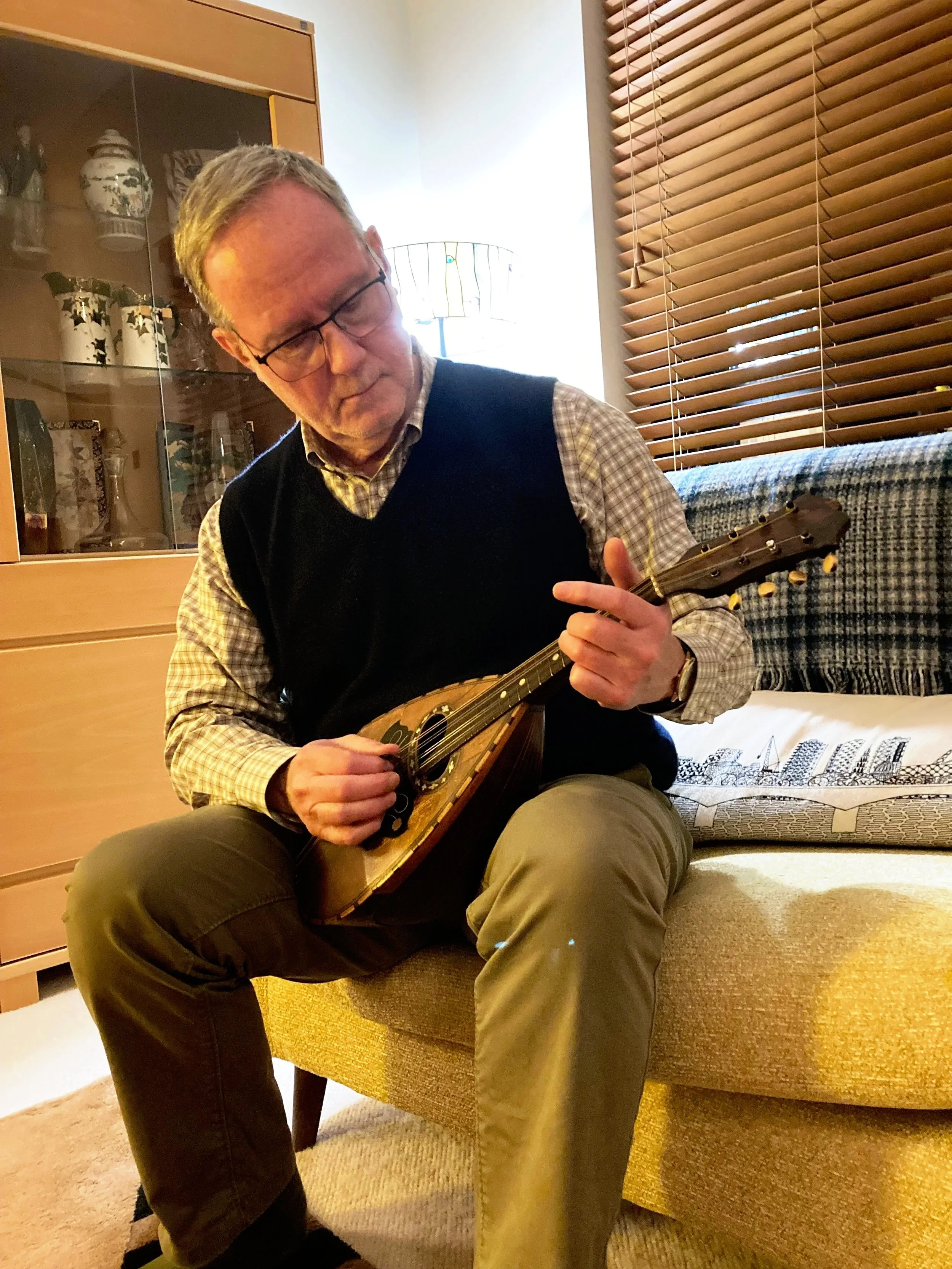
‘‘I have been learning the mandolin with Brad for just over a year now. He is knowledgeable, enthusiastic, patient and very good at judging my level so that in each lesson I learn something new and feel stretched, but never get disheartened through being pushed too hard.’’
Roger W.
Why Learn Mandolin?
The mandolin is one of the most versatile and rewarding instruments to master, offering a unique sonic palette that spans centuries of music. For the beginner, its compact scale makes it an approachable entry point into the world of string instruments.
Beyond its portability, the mandolin is a social instrument; whether you aspire to join a classical mandolin orchestra, lead a folk session, or perform contemporary chamber music, the mandolin opens doors to collaborative opportunities that are often less accessible to solo instrumentalists.
While the guitar is a beautiful solo instrument, its natural volume can often be limited when playing alongside louder instruments. In contrast, the mandolin is designed for projection. Its double-coursed steel strings and high-frequency range allow it to "cut through" the texture of an ensemble, making it a preferred choice for orchestral work, chamber music, and folk sessions alike.
From Absolute Beginner to Orchestral Performance
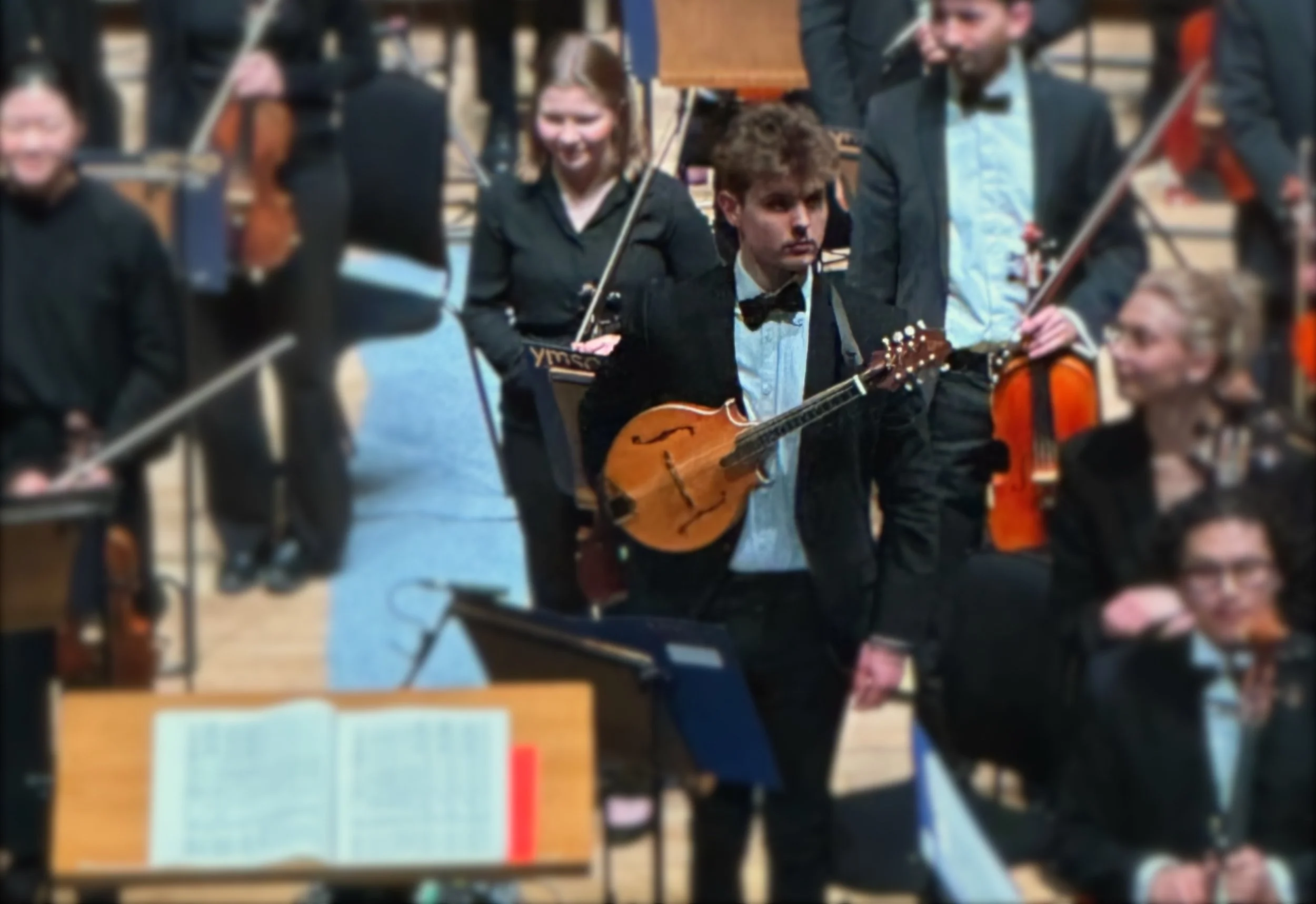
My own obsession with the instrument began in 2017 when I was called to perform ‘Deh, vieni alla finestra’ from Mozart’s Don Giovanni with Royal Academy Opera. As a principal guitarist, I had to navigate that same steep learning curve my students face today—grappling with the mandolin's compact scale, its unique fifths tuning, and the precision required for double-coursed strings. This 'guitarist-to-mandolinist' perspective allows me to anticipate the specific challenges you'll face, turning those initial hurdles into a professional, fluid technique.
Teaching the mandolin requires an understanding of its unique technical demands. My lessons are tailored to this specifically:
The Foundations & Ergonomic Setup: For beginners, we focus on the "architecture" of playing. This includes correct posture and positioning to ensure ease of play. We prioritise proper plectrum grip and picking angles, alongside the crucial choice of pick gauge. I recommend heavy, stiff plectrums (typically 0.8mm to 1.5mm) with a pointed tip (such as the Jim Dunlop Jazz III series) to provide the resistance needed for a clean, fluid tremolo and to prevent resistance as well as the "clicking" sound caused by thinner picks.
Diverse Styles: While my approach is rooted in the classical tradition, I have helped many students with everything from the rhythmic drive of Italian folk to the nuanced dynamics of contemporary orchestral mandolin parts.
Buying Advice for London Students
For those looking to purchase their first mandolin, London offers some fantastic resources, including the historic shops of Denmark Street. However, for a beginner, the sheer variety can be overwhelming. Before you head into Central London or an online store, I recommend a free introductory consultation to discuss what to look for.
In my experience, I have seen many students held back by purchasing a "random" mandolin online or from a non-specialist shop. Often, these instruments suffer from an improper build or a poor setup, such as a bridge that is too high or intonation that is fundamentally flawed. This makes the instrument unnecessarily difficult to play and can even lead to bad technical habits or hand strain.
An Important Consideration!
The build of your mandolin is the single biggest factor in determining your posture, plectrum angle, and tone. Because the anatomy of the instrument dictates your physical approach, choosing between a bowl-back and a flat-back is a fundamental decision that will shape your entire technical development.
The Neapolitan 'Bowl Back': Often associated with the classical Italian tradition, the bowl back offers a bright, shimmering tone with incredible projection. However, it can be more challenging for beginners; its rounded shape is prone to "slipping" during play, and these instruments typically lack strap buttons for support.
Interestingly, the traditional Italian technique of picking ‘in line’ with the string is a direct result of this anatomy. Historically, players had to use their forearm to pin and support the instrument's rounded body, which naturally dictated the angle of the plectrum.
The 'Flat Back' (Archtop or Flattop): More common in Folk, Bluegrass, and modern Celtic music, these instruments offer a sturdier feel and a punchier, "woody" tone. Their flat profile makes them much more stable against the body, and they are usually equipped with straps for ease of use.
I personally choose to play a flat back, as I find the ergonomics and versatility suit a wide range of repertoire. Within this category, you will encounter several iconic designs, most notably the ‘A-style’ (teardrop shaped) and the ornate ‘F-style’ (featuring the classic Florentine scroll and points).
Ready to Start Your Mandolin Journey?
Whether you are picking up a mandolin for the first time, transitioning from the guitar, or preparing for a professional orchestral engagement, the right guidance is the key to your success. For more information on studio availability, visit my Wimbledon Guitar Lessons page or contact me directly.
Don't let technical hurdles hold back your creativity. Let's improve your playing together.