Learning Classical Guitar Later in Life
Guitar Lessons for Those with Time to Finally Pursue Their Passion
Retirement offers the gift of time: time to pursue passions, explore new interests, and invest in activities that enrich your life. For many people entering retirement, learning classical guitar has become an ideal way to stay mentally sharp, socially connected, and creatively fulfilled. As a classical guitar teacher in Wimbledon, I've witnessed how guitar lessons can transform cognitive health and quality of life for those finally able to dedicate time to learning music.
Starting Guitar Lessons in Retirement
Many people worry they've missed their chance to learn a new skill, but research and my own teaching experience prove otherwise. The results are encouraging for musical training in adulthood, as participants showed similar general cognitive function enhancements as life-long musicians.
Your first step is finding a teacher experienced in working with adult learners. Lessons tailored to adult beginners take a different approach than children's lessons, focusing on music you love, progressing at a comfortable pace, and accommodating individual learning styles and any physical considerations.
I offer guitar lessons both in my Wimbledon studio and online, providing flexibility to suit your preferences and circumstances. During a trial lesson, we'll assess your goals, discuss any concerns, and create a learning path that feels achievable and enjoyable.
Social Connections Through Music
Adults frequently cite the social nature of musical activities as a motivating factor for continuing engagement in learning an instrument, with the social aspect offering wellbeing benefits through developing new relationships and building community.
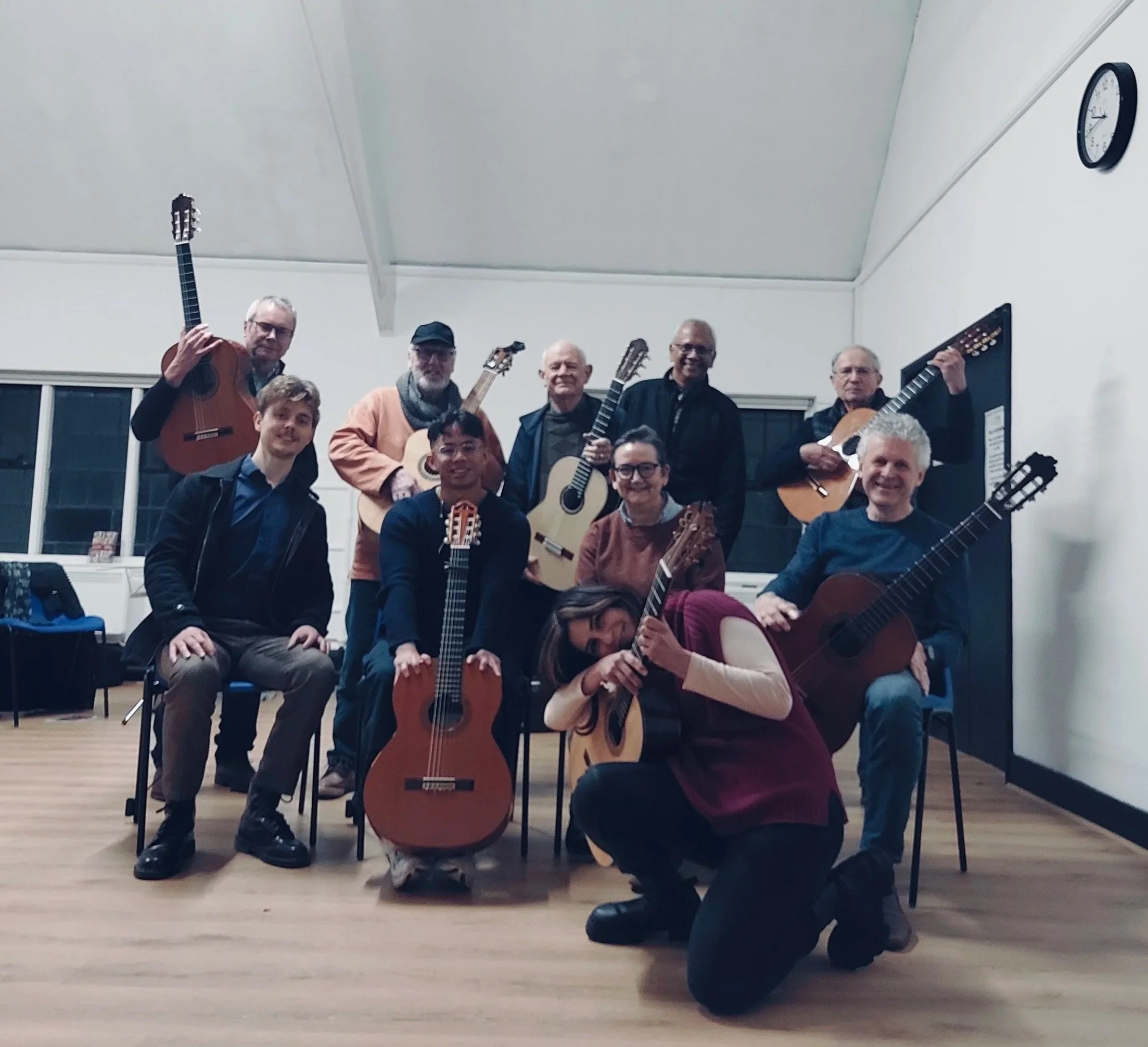
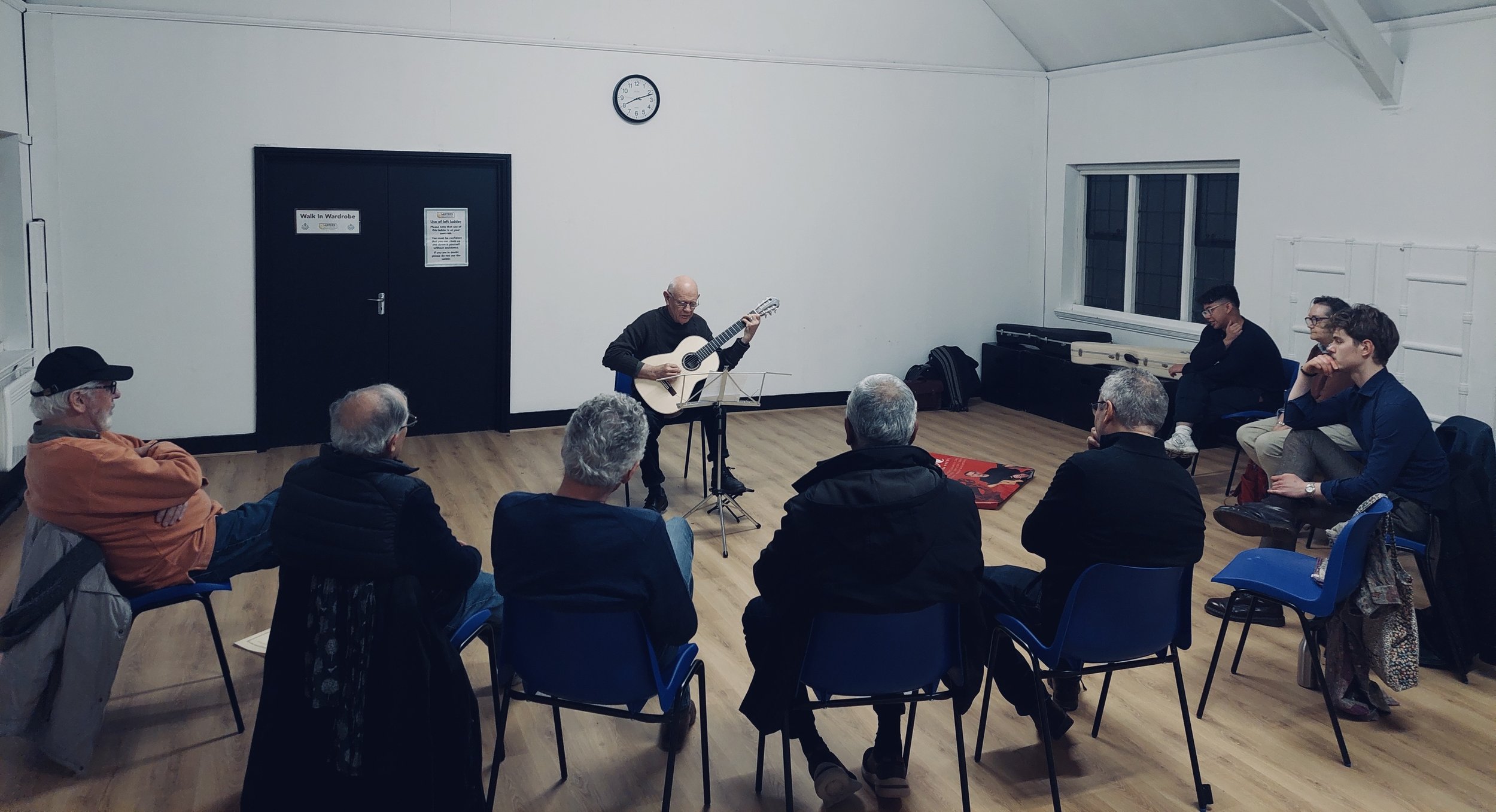
As part of my teaching practice, I'm actively involved with the Wimbledon classical Guitar Society (WiGS), which consists largely of people in their retirement years who share a passion for classical guitar. WiGS provides a vibrant community where guitarists connect through regular concerts, my performance coaching sessions, and meetups in members homes.
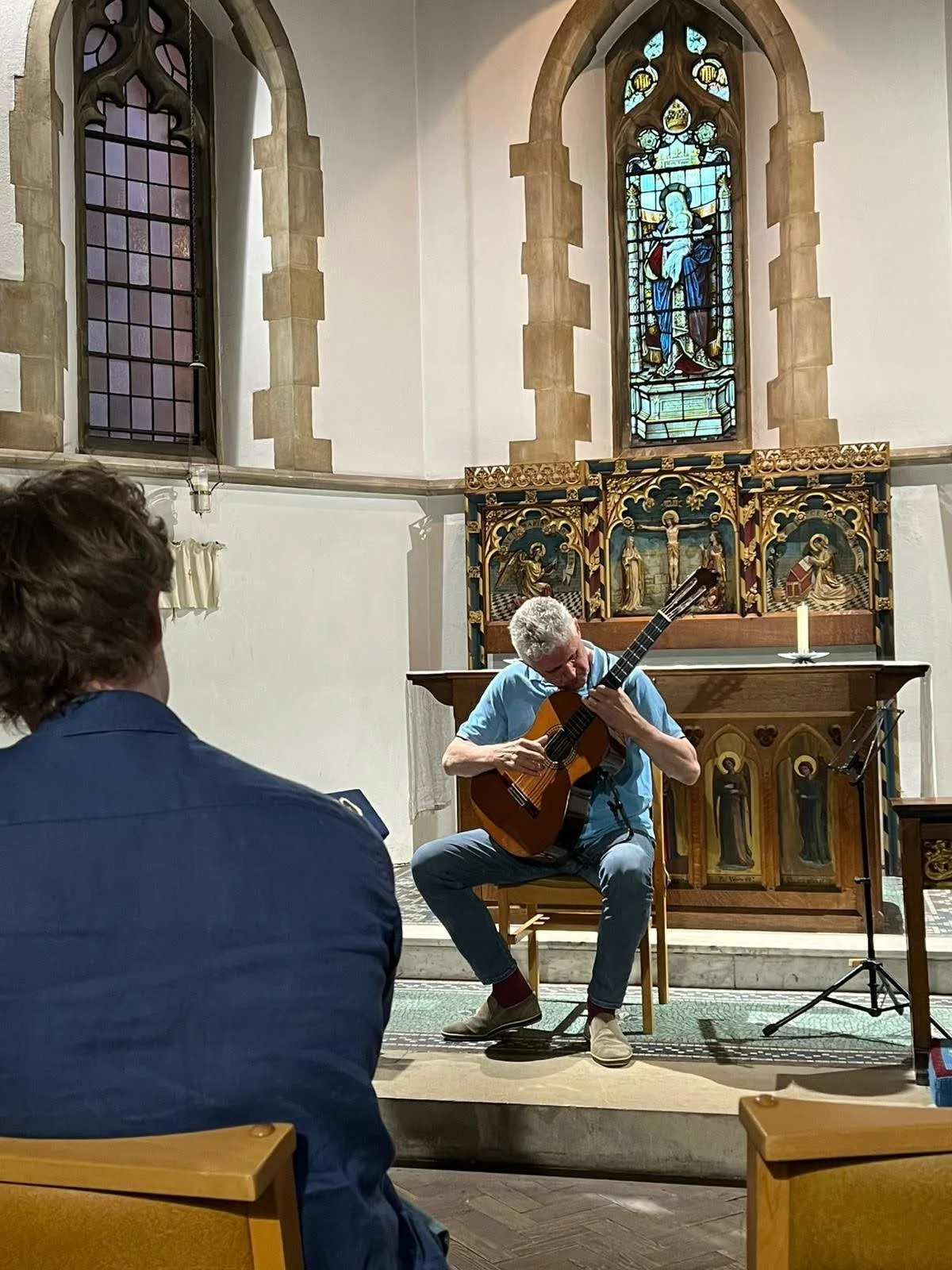
The society offers a welcoming environment where guitarists of all levels can attend world-class concerts, participate in masterclasses with visiting artists, and perform in supportive recitals. Many of my students have found that WiGS events become highlights of their social calendar, providing both musical enrichment and genuine friendships with like-minded individuals.
These gatherings create a supportive community where members celebrate each other's progress, share musical experiences, and enjoy the camaraderie of collective music-making. The intergenerational aspect of WiGS, where experienced players mentor newer learners, adds particular value to the community.

The Science Behind Music and Brain Health
Research consistently demonstrates that musical training enhances cognitive function across all ages, with benefits extending to attention, reasoning, and speed of information processing. The evidence for learning an instrument during retirement years is particularly compelling.
A study by Jennifer Bugos at the University of South Florida found that just six months of music lessons improved memory, verbal fluency, information processing, and planning ability in adults aged 60 to 85. Even more encouraging, research shows that 10 weeks of musical instrument training improves verbal memory, while 16 weeks of piano lessons improved working memory and thinking speed.
The brain's remarkable ability to adapt and change, known as neuroplasticity, continues throughout life. Learning classical guitar provides exactly the kind of complex, multi-sensory challenge that promotes neuroplasticity and maintains cognitive vitality.
What to Expect in Your Lessons
Lessons for adult learners emphasise enjoyment and steady progress over rigid achievement timelines. We'll start with proper posture and basic technique, then quickly move into playing simple melodies and pieces. You'll learn to read music notation gradually, building literacy alongside practical playing skills.
I select repertoire that's both technically appropriate and musically satisfying—pieces you'll genuinely enjoy playing rather than tedious exercises. Many students are motivated by learning familiar folk songs, classical favorites, or music from their youth that holds personal meaning.
Practice requirements are realistic. Even 15-20 minutes daily yields significant progress without feeling overwhelming. The key is consistency rather than marathon sessions, making guitar practice an enjoyable part of your daily routine.
Practical Considerations
Classical guitars come in a range of sizes. If you're smaller in stature or have shorter arms, a slightly smaller instrument can improve comfort significantly. I can advise on instrument selection during your trial lesson.
If you have arthritis or joint concerns, the gentle pressure required for nylon strings is manageable for most people. We can also adjust your technique to work with your physical capabilities, ensuring playing remains comfortable and sustainable.
For those with vision concerns, I can provide enlarged music notation and teach strategies for memorising pieces, reducing reliance on reading small print. Technology like tablet-based sheet music allows easy magnification of scores.
Take the First Step
If you're in the Wimbledon area and interested in exploring classical guitar, I'd love to work with you. I offer free trial lessons both in-studio and online, giving you the opportunity to experience my teaching approach and see how guitar learning might fit into your life.
Guitar lessons represent an investment in your cognitive health, emotional wellbeing, and quality of life. It's never too late to start, and the benefits begin from your very first lesson. Get in touch to arrange your free trial lesson—I look forward to helping you discover the joy and cognitive benefits of classical guitar.